I design for the moments where humans need to stay in control.
Here's my thinking, my framework, and the work behind it. Not a portfolio. A perspective on what it means to design for AI systems that humans can actually rely on. Because autonomy without oversight isn't a feature, it's a risk. And right now, that gap between what AI can do and what humans can confidently trust it to do is exactly where design belongs.
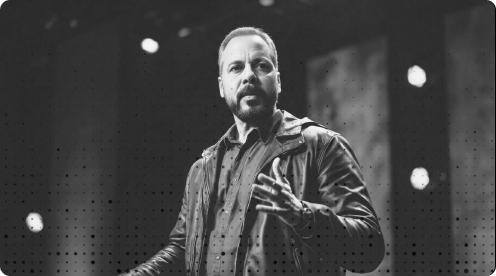
From designing tools to orchestrating intelligence
For almost two decades, I've obsessed over how humans interact with tools, shaping interfaces, workflows, and experiences that make complex systems feel intuitive. As Lead Product Designer in the Cloud Unit at Mendix (a Siemens business), I lead discovery, definition, and delivery for how teams deploy, operate, and govern their applications in the cloud. Now, I'm channeling that craft into a new frontier: designing for AI systems and the logic that guides autonomous agents. Same curiosity, new canvas.
My Framework – The Cognitive Stack
Designing AI isn't about static screens anymore. It's about architecting the layers of intelligence behind autonomous action. The Cognitive Stack is how I move teams past the empty chat box toward high-trust agentic systems.
Contextual Grounding
Before an AI can act, it needs to know what's going on. I design how the system pulls in the right data, at the right time, so it actually understands what the user means, not just what they typed.
Agentic Orchestration
AI agents rarely work alone. I map out how multiple agents hand off work to each other, who does what, and in what order. So the whole system moves with intent instead of guessing.
Human-in-the-Loop Governance
Autonomy doesn't mean 'leave the humans out.' I design the moments where people step in to approve, correct, or overrule the AI and make the system's reasoning visible, so those decisions are easy to make.
Validation & Logic Simulation
AI can be unpredictable, slow, or just plain wrong. I prototype and stress-test the interaction before it ships. So we catch the awkward moments, the long pauses, and the wrong answers early.
Continuous Orchestration
Launching is just the start. I keep watching how the system behaves in the real world, spot where it drifts, and tune the behaviour over time. Because agentic systems are never really 'done.'
The Paradigm Shift
I don't design chat boxes. I design the logic that makes AI safe to let loose.
| Feature | Old-School Product Design | AI System Design |
|---|---|---|
| What matters most | Where the user looks on the screen. | How the system thinks behind the screen. |
| How the logic works | Press A, get B. Every time. | Ask A, get a range of possible answers. |
| Who does the work | The user clicks through the steps | The user sets the direction, the system does the steps |
| The real "problem" | Too many clicks, too much friction | Can the user actually trust what the system is doing? |
| The goal | Make tools easier to use. | Make AI collaborators easier to trust |
What I Bring to the Table
Twenty years designing products. The last few, rewiring that craft for AI. I sit between the complex logic of agentic systems and the humans who need to trust them, turning unpredictable AI into something reliable enough to ship.
| The AI Side | The Design Side |
|---|---|
| Agentic UX: Designing how multiple AI agents work together and hand off tasks. | 20 Years of craft: Leading UX strategy for global enterprise platforms. |
| Grounded logic: Making sure the AI pulls from the right data (RAG, MCP) before it acts. | Systems Thinking: Building design systems that scale across Mendix and Siemens' industrial ecosystems. |
| Governance: Designing the moments where humans step in, and making the AI's reasoning visible. | Strategic roadmapping: Lining up business goals with what AI can actually deliver today. |
| Designing for uncertainty: Handling the slow responses, the wrong answers, the confidence gaps. | Technical fluency: Comfortable with AI orchestration (ComfyUI), prototyping (Figma), and data flows (JSON, Python). |
Let’s think together
If you’re working on something at the intersection of AI, autonomy, and human trust, I’m always up for a good conversation.